
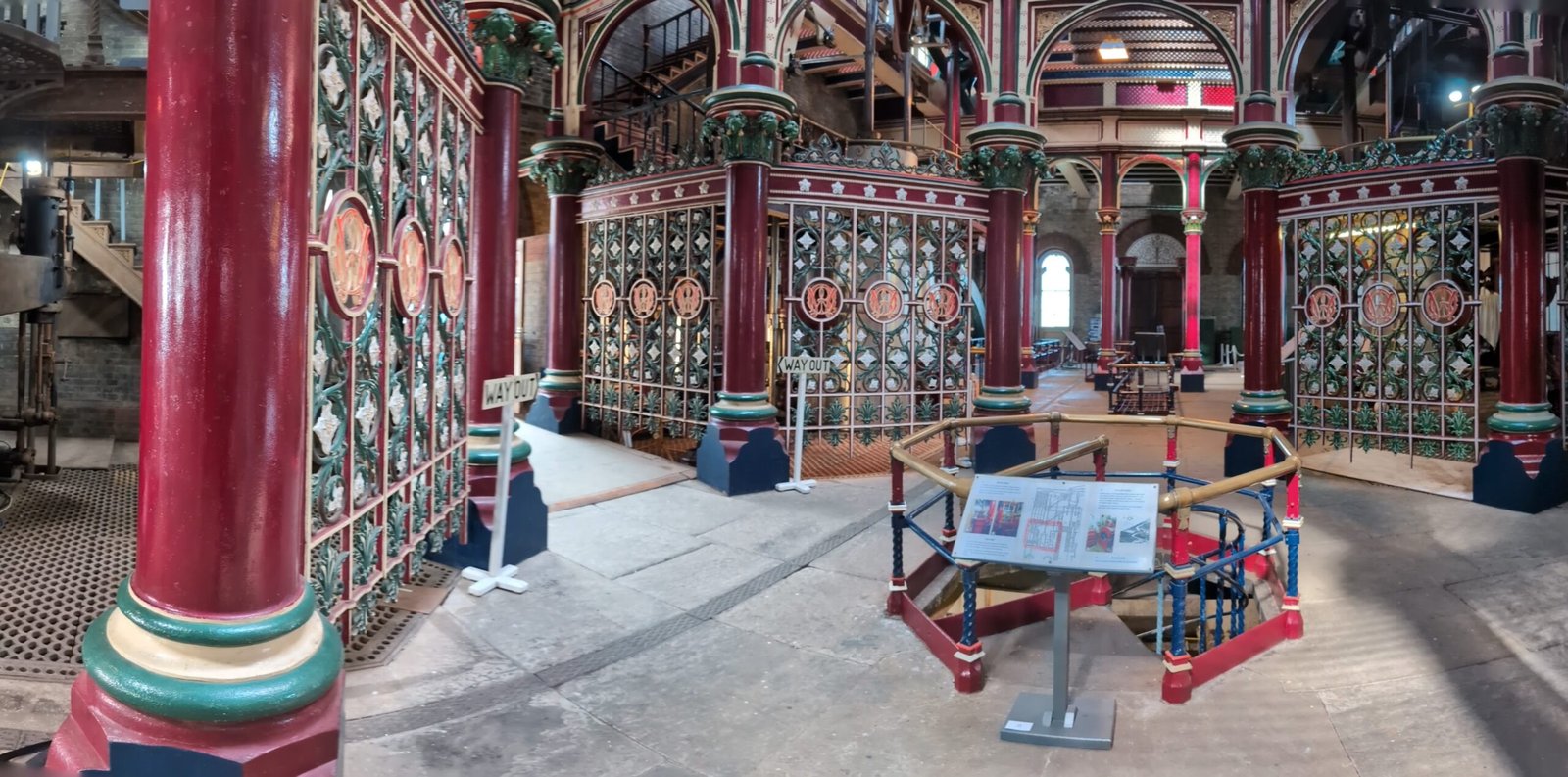
Crossness Pumping Station stands as one of London’s most extraordinary yet overlooked engineering landmarks, a place where Victorian innovation helped transform the health and future of an entire city. Long before the Thames Barrier became London’s modern shield against flooding, Crossness was already playing a critical role behind the scenes, forming part of a revolutionary system designed by Joseph Bazalgette to carry waste safely away from the capital. Together, these feats of engineering tell a powerful story of how London was protected, reshaped, and ultimately saved.
Crossness Pumping Station and the Hidden Guardians of London: How the Thames Barrier and Joseph Bazalgette Saved Millions
Most of us rarely think about water.
We wake up, turn on the tap, and expect clean water to flow. We flush a toilet and trust that everything disappears somewhere beneath the streets. The system works so quietly and efficiently that it almost feels automatic, as if it simply exists as part of modern life.
But it wasn’t always that way.
In fact, the London we know today, the city of millions that runs every single day without being overwhelmed by disease or flooding, exists largely because of a handful of extraordinary engineering decisions made more than 150 years ago.
Decisions made by people most of us have never heard of.
Not long ago, while filming along the Thames, I found myself standing between two remarkable places: the futuristic silver gates of the Thames Barrier and the ornate Victorian engines of Crossness Pumping Station.
In that moment, it struck me just how invisible the systems that protect us really are and how many millions of lives have quietly depended on them.
Crossness Pumping Station: A Journey to the Edge of the City
If you travel east along the Thames, away from central London’s crowded bridges and historic landmarks, the atmosphere slowly begins to shift.
The skyscrapers thin out.
The river widens.
The sky suddenly feels enormous.
This stretch of the Thames feels different, calmer, quieter, almost industrial in places, but with a strange beauty to it. It’s here, in Woolwich, that you’ll find the Thames Barrier rising out of the river.
Getting there is surprisingly easy. The Docklands Light Railway can take you out toward the river’s edge, with Pontoon Dock DLR Station only a short walk away. You can also arrive via Woolwich Arsenal Station and follow the riverside paths until the barrier comes into view.
And when it does appear, it’s impossible to miss.
Huge silver structures sit across the water like something out of a science fiction film, massive, curved gates that seem to float above the surface.
Beside it sits Thames Barrier Park, a beautifully designed green space with long grass avenues and sculpted hedges leading the eye straight toward the river.
It’s peaceful there. Much quieter than you might expect.
But the calm hides something incredibly powerful.
Crossness Pumping Station and London’s Flood Shield
London sits on a tidal river connected directly to the North Sea. That means twice a day, the Thames rises and falls with the tide.
Usually, this rhythm is harmless. But when strong North Sea storms push water toward the coast at the same time as high tide in the Thames, the river can surge dramatically. Without protection, that surge could push upstream and flood huge areas of the capital.
That’s where the Thames Barrier comes in.
Hidden beneath the water most of the time are enormous gates, each weighing thousands of tonnes. When dangerous conditions are predicted, those gates slowly rotate upward from the riverbed, forming a solid barrier across the Thames.
Within minutes, the river can be sealed off.
It’s one of the largest movable flood barriers in the world, protecting homes, hospitals, transport systems, businesses, and entire communities across London.
Millions of people rely on it, and yet most Londoners have never stood beside it.
Crossness Pumping Station: The Forgotten Story Downriver
But the Thames Barrier is only one chapter in a much bigger story about London and water.
A little further downriver stands another place that almost no one talks about, but which arguably saved the city long before the barrier ever existed: Crossness Pumping Station.
The building itself is extraordinary.
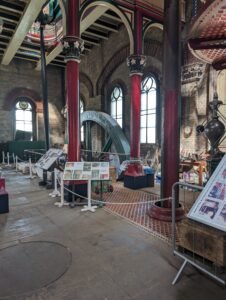
From the outside, it looks like a Victorian industrial structure. But inside, it feels almost like stepping into a cathedral of engineering, ornate ironwork, vast engines, bright colours, and towering machinery that once powered one of the most important public health systems ever built.
Crossness was part of the revolutionary sewer system designed by Joseph Bazalgette.
In the mid-1800s, London had a serious problem.
The rapidly expanding city had no proper sewage infrastructure. Waste from homes, factories, and streets flowed directly into the River Thames, the same river many people relied on for drinking water.
Disease spread rapidly through the contaminated water that flowed through the city. With no proper sewage system, waste from homes and streets drained directly into the River Thames, polluting the very water many Londoners relied on for drinking and cooking. The consequences were devastating. Repeated outbreaks of Cholera swept through the population, killing tens of thousands of people and leaving entire communities in fear of the next wave of illness. Doctors and scientists were only beginning to understand how the disease spread, but the connection between the filthy water and the suffering it caused was becoming impossible to ignore.
Then came the long, sweltering summer of 1858. As temperatures soared, the polluted Thames began to stagnate and rot beneath the heat, releasing an overwhelming stench across the city. The smell was so unbearable that even the government could no longer pretend the crisis didn’t exist. What followed would become known as the Great Stink of 1858, a moment when the foul state of the river finally forced London to confront the urgent need for a proper sewer system.
The smell from the polluted Thames became so unbearable that even Parliament could no longer ignore it. Curtains soaked in chemicals were hung across the windows of government buildings in a desperate attempt to block the stench.
The crisis soon became infamous as the Great Stink of 1858. During that extraordinary summer, the smell rising from the Thames grew so overpowering that it drifted through streets, homes, and even into the chambers of Parliament. Members of the government reportedly hung curtains soaked in chemicals across the windows in a desperate attempt to block the stench. Still, nothing could truly hide the reality of what the river had become. The Thames, once the lifeblood of the city, had turned into a vast open sewer, and the scale of the problem was finally impossible to ignore.
Faced with public outrage, health fears, and a river that could no longer be tolerated, the government was finally forced to confront the crisis. What had been debated and delayed for years could no longer wait. Plans were rushed forward, funding was approved, and the ambitious engineering vision of Joseph Bazalgette began to take shape, a revolutionary sewer system that would change the health and future of London forever.
The Man Who Rebuilt London Underground
Joseph Bazalgette proposed something revolutionary.
Instead of letting waste flow straight into the Thames, he designed a vast network of intercepting sewers that would collect sewage across London and carry it eastward through underground tunnels.
At places like Crossness Pumping Station, enormous steam-powered engines played a crucial role in making the new system work. These vast machines pumped the city’s sewage through the newly built tunnels and carried it eastward, away from central London and the densely populated areas where so many people lived. It was an extraordinary feat of Victorian engineering, designed not only to move waste efficiently but to protect the health of an entire city.
The scale of the project itself was almost unimaginable. Beneath the streets of London, hundreds of miles of brick-lined tunnels were constructed, forming a vast hidden network that intercepted sewage before it could flow directly into the Thames. Building it required immense planning, manpower, and determination. Streets were dug up, embankments were built along the river, and an underground system began to take shape that would quietly transform the city forever.
But Joseph Bazalgette made one decision that would prove even more remarkable than the engineering itself. At a time when London’s population was already booming, he chose to design the entire sewer network far larger than it technically needed to be. In fact, he deliberately built it roughly twice the capacity required for the city at that moment. Bazalgette understood that London would continue to grow, and he wanted the system to serve not just the people of his time, but future generations as well.
That foresight proved extraordinary. More than 150 years later, large parts of Bazalgette’s sewer network are still functioning as part of London’s modern infrastructure. His decision to plan for the future meant that the system remained resilient long after the Victorian era had passed.
The impact on public health was almost immediate. Once the sewer system was operational, outbreaks of cholera, which had devastated London for decades, rapidly declined. The city became cleaner, safer, and healthier for millions of people.
Because of this transformation, some historians believe that Joseph Bazalgette may have saved more lives than almost any engineer in human history. Yet despite the scale of his achievement and the millions who have benefited from it, his name is still surprisingly unknown to many people today.
The Moment It Really Hit Me
The moment the scale of it all really hit me was when I was filming inside Crossness Pumping Station.
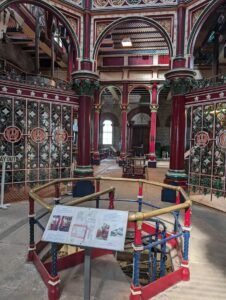
Standing there among the restored engines, surrounded by towering iron columns and intricate Victorian machinery, I found myself pausing for a moment and just looking around. It’s a beautiful space, but it also carries an incredible sense of history. And in that quiet moment, something struck me: how rarely most of us ever think about water.
Every day we turn on a tap and clean water appears.
We flush a toilet, and everything simply disappears. and it feels effortless, almost automatic.
But standing there, it suddenly felt anything but simple. Behind those ordinary actions is an enormous hidden world: miles of pipes beneath our feet, tunnels stretching across the city, pumping stations like this one, and generations of engineers, planners, and workers who built and maintained systems most of us will never see.
Cities like London depend entirely on these invisible networks. Without them, life here as we know it simply wouldn’t be possible.
And when you’re standing inside Crossness, surrounded by machines built in the 1860s that helped transform public health for millions of people, it’s hard not to feel a deep sense of awe and gratitude for the people who built them.
Why You Should Visit Crossness Pumping Station
Places like Crossness Pumping Station are rare.
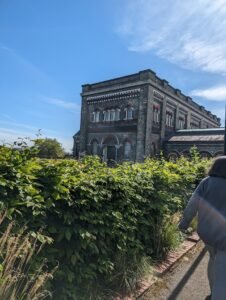
It isn’t just a museum or a historic building. It’s a living reminder of how human ingenuity can transform an entire city.
I first came across Crossness while filming, and I remember feeling completely captivated by it. There was something about the scale, the detail, and the atmosphere that stayed with me long after I left. It didn’t feel like one of those places you simply visit and move on from. It felt unfinished in a way not in terms of the restoration, but in the sense that there is still so much more potential for stories to be told, for people to experience it, and for it to evolve.
That curiosity quickly turned into something stronger. I didn’t just want to document it I wanted to be part of it. Volunteering felt like the only real way to do that, to step beyond the role of observer and contribute to the life of the place itself.
The volunteers who have restored the engines have done something truly remarkable, bringing this extraordinary site back to life so that others can experience it. Their dedication is visible in every polished surface, every working mechanism, every carefully preserved detail. It’s not just restoration it’s care, pride, and a shared belief that this place matters.
When the engines run on special open days, the entire building seems to vibrate with energy, just as it once did more than a century ago. There’s a sense of anticipation as they begin to move, and then suddenly, the space comes alive. The sound, the motion, the rhythm—it’s impossible not to feel it.
And in that moment, the story stops feeling like distant history and starts to feel very real. You begin to understand that this building was not just an industrial space, but a place that played a vital role in protecting the health of millions of people. The decisions made here, and the engineering vision behind them, helped shape the future of London as a modern city.
It becomes clear that the systems we take for granted every day, clean water, sanitation, and public health, are not accidental conveniences but the result of bold thinking, careful planning, and extraordinary engineering.
That’s why I chose to volunteer here. Because Crossness isn’t just about preserving the past, it’s about helping people connect with it, learn from it, and see its relevance today. And being even a small part of that feels incredibly meaningful.
A Final Thought by the River
Standing by the Thames and watching the tide move quietly past the Thames Barrier, it’s easy to think of the river as something ancient and entirely natural. Yet London’s survival has always depended on how we understand and manage that water. Without the sewer system designed by Joseph Bazalgette, the city might have remained plagued by disease, and without the barrier, many neighbourhoods would still live with the constant threat of devastating floods.
These structures act as quiet guardians of the city, protecting millions of lives every day, even though most people rarely think about them. And nowhere is this story more powerfully brought to life than at Crossness Pumping Station. Once you begin to understand its role, Crossness Pumping Station stops being just a historic site and becomes part of a much larger system that made modern London possible.
But once you notice these hidden systems, it changes how you see the city. If you ever feel curious about what keeps London alive beneath its streets—or if you simply want to experience one of the most extraordinary Victorian engineering buildings in the world, it’s worth making the journey east to visit Crossness Pumping Station. Walk through the vast engine house at Crossness Pumping Station, stand beside the restored machines, and imagine the noise, steam, and energy that once powered them.
In doing so, you’re not just visiting a historic building; at Crossness Pumping Station, you’re stepping into the story of the man whose vision helped save millions of lives. Bazalgette may not be a household name, but the London we live in today exists, in large part, because of him, and Crossness Pumping Station remains one of the most powerful places to witness that legacy firsthand.
Fancy visiting Crossness in Abbey Wood? I would suggest booking tickets directly through their website: https://crossness.org.uk/
Lastly, if you fancy reading our other blogs about our experience of the Thames Path walk, go to: https://earthexplorerpro.com/the-thames-path-walk/