
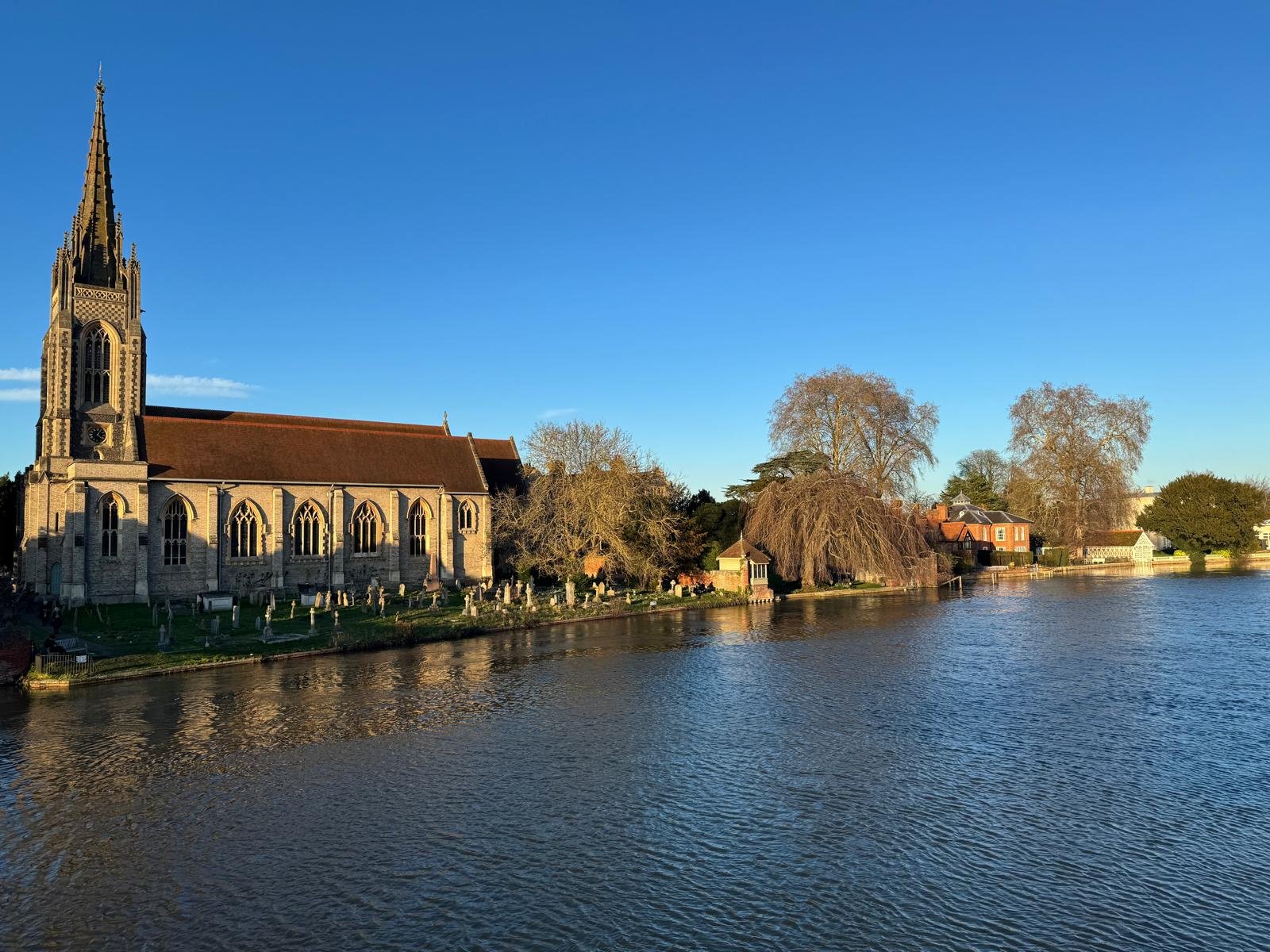
Thames Path Walk: Goring-on-Thames & Streatley to Marlow. Some walks feel like exercise. Others feel more like a quiet conversation with the landscape, and this particular stretch of the Thames Path falls beautifully into that second category. Walking it together, we discovered a gentle unfolding of river life, sleepy villages, lush greenery, and those unexpected little moments that make long-distance walking quietly addictive. It’s the kind of journey where the destination matters less than the calm, steady rhythm of getting there.
A peaceful start on the Thames Path Walk
Beginning between Goring and Streatley always feels symbolic. Two villages facing one another across the River Thames, historically divided by county boundaries yet completely connected by the rhythm of river life. Something is grounding about starting a walk in a place where geography has shaped history for centuries.
That morning, mist hovered low over the water, softening the hills and muting colours. The quietness made it feel as though the day was gently unfolding just for us. There’s a calm anticipation at the beginning of a long walk, the sense of possibility, the excitement of not quite knowing what small moments will stay with you.
The early miles were easy. Gravel tracks turned into grassy stretches, sometimes narrowing into soft paths through reeds. Swans glided past with calm authority, while rowers moved rhythmically across the water. Walking side by side meant conversation came naturally, sometimes deep, sometimes light, sometimes replaced entirely by comfortable silence.
A river that once divided counties in Goring-on-Thames & Streatley
This stretch carries subtle historical weight. For centuries, the river marked the boundary between Oxfordshire and Berkshire, influencing trade routes, settlement patterns, and even local identities. Goring grew into a quieter residential village, while Streatley leaned toward inns, travellers, and river commerce.
You can still sense those differences today, not dramatically, but in the atmosphere. It adds depth to the walk, a reminder that rivers aren’t just scenic; they shape human lives, movement, and connection.

A memorable stay at the Bull Inn in Goring-on-Thames
If you’re planning this section, stopping at The Bull Inn genuinely enhances the experience. After travelling in, it provided exactly what walkers hope for: friendly, down-to-earth hospitality, good, affordable food, and accommodation that feels restful rather than functional.
The welcome felt effortless, warm without being over the top. Dinner was satisfying and comforting, perfect before a full day outdoors. It’s always reassuring when somewhere strikes that balance between quality and affordability.
We stayed in one of the cottages instead of the main pub rooms, and it turned out to be ideal. Quiet, cosy, and just removed enough from the main buzz to sleep deeply. Waking up refreshed made the next day’s walk even more enjoyable.
Meadows, locks, and riverside life along the Thames Path Walk
One of the joys of this stretch is how varied it feels without being physically demanding. There are open meadows where the river widens and the sky feels enormous, wooded sections offering shade and birdsong, and little settlements that appear just when you’re ready for a pause.
The locks quickly became favourite stopping points. There’s something meditative about watching boats rise and fall with the water level, hearing gates creak, chatting casually with people travelling at a completely different pace. These pauses broke the walk into natural chapters.
And then there are the pubs and cafés scattered along the river, not tourist traps, but genuine local spaces where walkers, cyclists, boaters, and residents intersect. Even brief stops added warmth and human connection to the day.
Classic Thames scenery along the way on the Thames Path Walk
As the miles pass, the river subtly changes character. It widens, becomes more polished, and sometimes busier with leisure boats and rowing crews. Elegant houses peek through trees, gardens slope toward the water, and everything takes on a quietly quintessential English feel.
Light plays a huge role here. Late afternoon sun reflecting on the water turned ordinary views into something almost cinematic. We found ourselves stopping more often, not because we were tired, but because the scenery kept inviting us to slow down.
The rhythm of walking together
Long-distance walking has a unique rhythm, especially when shared. After a few hours, the pace synchronises without effort. Conversations ebb and flow naturally. Thoughts seem clearer somehow, maybe because walking gives them space.
We noticed small things more intensely: wind rippling the water, the smell of grass, birds darting low over the river. Even simple snacks felt surprisingly satisfying. It’s amazing how quickly the outside world quiets when your focus narrows to movement, landscape, and companionship.
River walks in particular feel grounding; they give you direction without urgency. You always know where you’re going, but there’s no pressure to rush.
Arriving in Marlow: a gentle reward
Reaching Marlow didn’t feel like finishing it felt like easing into a well-earned pause. The suspension bridge appeared first, elegant and slightly theatrical, quietly signalling arrival without fuss. That moment brought a subtle shift: from traveller to observer.
The town has a relaxed riverside charm. Independent cafés spill onto pavements, small shops invite browsing, and people stroll without obvious deadlines. It feels lived-in rather than staged for visitors.
After miles on foot, simple pleasures felt luxurious: sitting beside the river, watching boats drift past, letting breathing settle. Shoes off briefly. Drink in hand. Legs are pleasantly tired. That quiet satisfaction of moving slowly through a landscape, truly experiencing it rather than rushing through it, lingered well into the evening.
Is the Thames Path walk worth it?
Absolutely, especially if you’re looking for a scenic but manageable Thames Path Walk that balances beauty, history, and accessibility.
This stretch of the Thames Path Walk is particularly good if you want:
-
Consistently beautiful river scenery without tough climbs
-
A mix of countryside, villages, and places to rest
-
Gentle terrain suitable for casual walkers or longer journeys
-
Time to think, reconnect, or enjoy being outdoors
The Thames Path Walk is also surprisingly convenient from London. With straightforward train connections, it’s entirely possible as a day trip countryside immersion by morning, miles of riverside walking along the Thames Path Walk during the day, and back to the city by evening without feeling rushed.
What makes this Thames Path Walk special isn’t dramatic peaks or intense challenges. It’s the steady rhythm, the changing light on the water, and the sense of gradual movement through a living landscape.
Calm. Restorative. Quietly memorable. Sometimes, that kind of Thames Path Walk is exactly what you need.
Do you want to learn more about the Thames? Go to the London Museum website to find out more.
We’ve shared plenty more stories from exploring England, hidden gems, scenic walks, and unforgettable stays. If you fancy another read, Travelling around England deserves the best introduction