
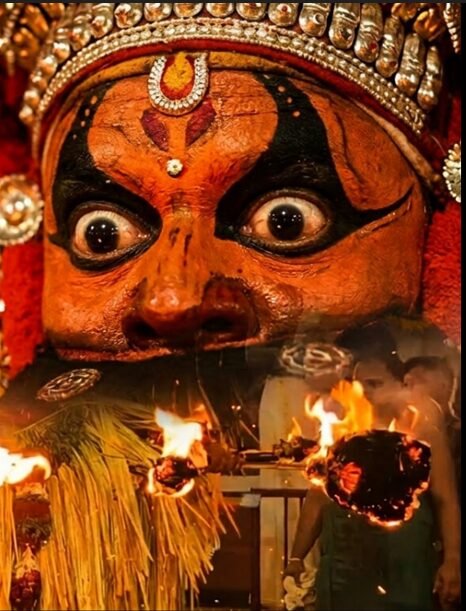
Theyyam in Kerala is not simply something you watch it is something you feel, something that slowly pulls you in until you realise you are no longer just an observer but part of an atmosphere charged with energy, devotion, and centuries of tradition; from the moment we arrived in Kannur in the early hours of the morning, stepping out of a rickshaw into the soft light of dawn, there was a quiet sense that we were about to witness something far deeper than a cultural performance, something that would challenge our expectations, heighten our senses, and leave a lasting impression long after the drums had faded and the flames had burned low.
There are certain moments in travel that resist simplification, experiences that cannot be reduced to a checklist or a photograph, but instead demand reflection, immersion, and a willingness to sit with complexity; witnessing Theyyam in Kannur was, for us, precisely such a moment one that unfolded slowly, intimately, and with a depth that neither of us had fully anticipated when we first began planning the journey.
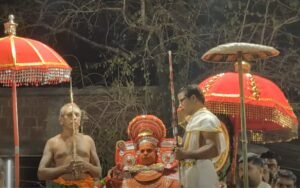
Theyyam in Kerala: History
Theyyam in Kerala, a ritual tradition with origins stretching back over 1,500 years, is often described in guidebooks as a performance or a form of ritual dance. Yet, such terminology feels inadequate when confronted with its lived reality, because what takes place is not simply an act to be watched but an experience to be entered into, one in which the boundaries between performer, deity, and audience become increasingly porous; as observers, we did not remain at a distance for long, but instead found ourselves drawn into a shared atmosphere that was as emotional as it was visual, as communal as it was spiritual.
Our journey to witness Theyyam in Kerala began not at the temple grounds, but in the early hours of the morning, when the world still felt half-asleep and the air carried that quiet stillness that exists just before sunrise; we climbed into a small auto-rickshaw, the kind that feels both fragile and enduring at the same time, and set off through narrow roads lined with palm trees and scattered houses, the engine humming steadily as we made our way towards the first performance of the day. There was something undeniably special about travelling at that hour, when the usual noise of daily life had not yet begun, and the journey itself felt like a transition not just in location, but in mindset, as though we were being gently carried towards something significant.
Arriving in the soft light of early morning, we were met not with spectacle, but with quiet preparation, which in many ways felt even more powerful; the performer sat calmly as the intricate process of applying makeup began, and we found ourselves completely absorbed in watching each deliberate movement, each carefully placed line of colour, as the face was transformed into something strikingly symbolic. The reds were vivid, the blacks deeply grounding, the yellows almost luminous in the morning light, and together they formed a visual language that spoke of tradition, identity, and continuity elements that have been preserved across centuries and remain profoundly relevant in the present.
What made this moment particularly compelling was not only the artistry involved, but the atmosphere that surrounded it, as members of the local community gathered quietly, some watching intently, others engaging in low conversation, all sharing in a collective sense of anticipation; there was no rush, no sense of urgency, but rather an understanding that this process required time, patience, and respect, and in allowing ourselves to slow down and simply observe, we began to appreciate the ritual not as a sequence of events, but as a gradual unfolding.
As the drums began to sound, softly at first and then with increasing intensity, the atmosphere shifted in a way that is difficult to articulate without experiencing it firsthand, because it was not simply a change in noise level, but a transformation in energy; the rhythm seemed to resonate through the body, creating a physical as well as emotional response, and as the crowd grew denser, we became increasingly aware of our own position within it not as detached spectators, but as participants in a shared moment of heightened awareness.
When the performer emerged in full costume, the transformation felt complete, and yet it was not the visual grandeur alone that captured our attention, but the change in presence, in movement, in expression; there was a sense that he had entered a different state of being, one that aligned with descriptions of trance yet retained an immediacy that made it feel entirely real and present. His gaze, at times intense and at others distant, suggested a form of consciousness that extended beyond the ordinary, and in witnessing this, we felt both a deep sense of awe and a recognition that we were encountering something that could not be easily explained.
The element of fire introduced an additional layer of intensity, one that brought with it both fascination and a subtle sense of vulnerability, particularly given our own cultural context; standing so close to open flames, feeling the heat directly on our skin, we could not help but reflect on how different this experience would be in the UK, where such proximity would likely be restricted by stringent health and safety regulations. And yet, here, it did not feel reckless or uncontrolled, but rather precise, intentional, and deeply embedded within the logic of the ritual itself, guided by a knowledge that has been refined over generations.
Later that same day, as the light began to soften and the air shifted towards evening, we found ourselves once again climbing into a rickshaw, this time for a second Theyyam performance, and the contrast between the morning and evening journeys added another dimension to the experience; where the morning had felt quiet and anticipatory, the evening carried a different kind of energy more vibrant, more charged, with the roads alive with movement and the sense that something significant was about to unfold once again. There was a familiarity to the journey now, yet also a renewed sense of curiosity, as we wondered how the experience might differ in a new setting, under different light, with a different crowd.
If anything, the evening performance intensified our understanding of Theyyam, as the interplay between fire, darkness, and movement created an atmosphere that felt almost otherworldly; the flames appeared brighter against the night sky, the rhythms more pronounced, and the collective energy of the crowd more palpable, as people pressed closer, hands reaching out for blessings, faces illuminated by flickering light. Once again, we found ourselves drawn forward, no longer hesitant, but open to the experience, willing to step closer and engage more fully with what was unfolding before us.
Throughout both encounters, what remained most striking was the performer’s ability to inhabit a state that felt simultaneously controlled and transcendent, as though he existed at the intersection of discipline and surrender; this was not performance in the conventional sense, but an embodiment of belief, a living expression of a tradition that continues to hold meaning for those who participate in it, and in witnessing this, we were reminded of the limitations of our own frameworks for understanding such experiences.
Theyyam in Kerala: Kannur West Beach Homestay
Returning each time to Kannur West Beach Homestay provided a grounding counterpoint to the intensity of the rituals, and it was here that the experience found a kind of balance, as our host Shah welcomed us back with a warmth that felt genuine and effortless; there is something profoundly comforting about being received into a space that feels like a home rather than a temporary stop, and Shah’s hospitality created exactly that environment, allowing us to reflect, rest, and process what we had witnessed.
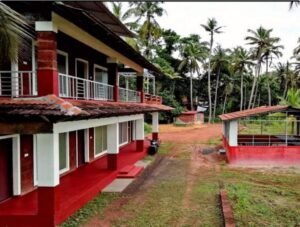
The meals he prepared were an integral part of this experience, not only because of their flavour and quality, but because they represented a form of care that extended beyond the practical, inviting us to slow down and appreciate the rhythms of daily life in the region; the fact that food was included as part of the stay also allowed us to navigate our budget more easily, freeing us from the constant need to plan or seek out options, and instead enabling us to immerse ourselves more fully in the environment.

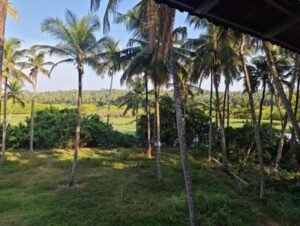
The setting itself further enhanced this sense of immersion, with the beach located just a short walk away, accessible via a path that felt both peaceful and quietly beautiful, offering moments of reflection between the intensity of the rituals and the calm of the sea; equally memorable was the saltwater lake behind Shah’s garden, where the presence of wildlife created a sense of stillness that contrasted with the energy of the Theyyam performances, reminding us of the diversity and richness of the landscape in which these traditions exist.
Theyyam in Kerala: Conclusion
In reflecting on our time in Kannur, it becomes evident that the experience of Theyyam in Kerala cannot be separated from the context in which it occurs, because Theyyam in Kerala is shaped not only by the ritual itself, but by the journeys taken to reach it, the people encountered along the way, and the spaces in which we rest and reflect; Theyyam in Kerala is as much about the atmosphere as it is about the performance, as much about the early morning rickshaw rides and quiet anticipation as it is about the intensity of fire and movement, and as much about the warmth of human connection as it is about spiritual transformation.
Theyyam in Kerala unfolds not in isolation but within a living, breathing environment, where the early morning journeys through still, quiet roads and the evening returns under fading light become part of the rhythm of the experience itself. Where each encounter whether with locals gathering in reverence or with hosts like Shah welcoming us back into a place that felt like home adds another layer of meaning to what we are witnessing; in this way, Theyyam in Kerala becomes more than a single event, evolving instead into a continuous thread that weaves through the day, connecting moments of intensity with moments of stillness.
Ultimately, Theyyam in Kerala left us with a sense not only of having witnessed something extraordinary, but of having stepped briefly into a world where tradition, community, and environment exist in profound harmony, and where the boundaries between observer and participant begin to dissolve, reminding us that Theyyam in Kerala is not just something to see, but something to experience, absorb, and carry with you long after you have left.
Fancy finding out more about India? Go to our main blog https://earthexplorerpro.com/why-travelling-around-india-is-the-best-idea/